How to Find New Suppliers: A Practical Guide for Procurement
10/12/2025
•3 MIN READ
In many companies, the current supplier base is no longer sufficient to ensure material availability, responsiveness, and regulatory compliance.
Data shows that in 2024 more than 76% of European companies experienced supply chain disruptions, and almost one third struggled to source essential materials due to unexpected events.
For this reason, finding new suppliers is no longer a sporadic activity, but a continuous process that requires advanced tools, updated data, and automation. Vendor intelligence platforms like Soource, which enable supplier discovery, data enrichment, automated RFX management, and continuous vendor base updates, allow procurement and supply chain teams to reduce risk, time, and dependency on a limited number of partners.
Why supplier diversification is crucial today
Relying on a small number of suppliers is one of the main vulnerabilities of modern supply chains. Limited tools and excessive manual activities often increase dependency on a narrow supplier base, as shown by a recent McKinsey research.
This dependence becomes particularly risky due to both internal business factors and external elements such as raw material availability and geopolitical instability, which can strongly impact delivery times, costs, and product availability.
Diversification allows companies to:
- Reduce the risk of shortages and delays.
- Limit exposure to geopolitical, logistical, and regulatory disruptions.
- Create backup alternatives.
- Maintain price competitiveness.
- Access new technologies, materials, and solutions faster.
For these reasons, multisourcing strategies are now essential for operational continuity and proactive risk management.
How to find new suppliers
There are several ways to identify new suppliers.
Each approach has different levels of effectiveness depending on industry and objectives, but all contribute to improving results.
1. Soource: automated scouting and vendor intelligence
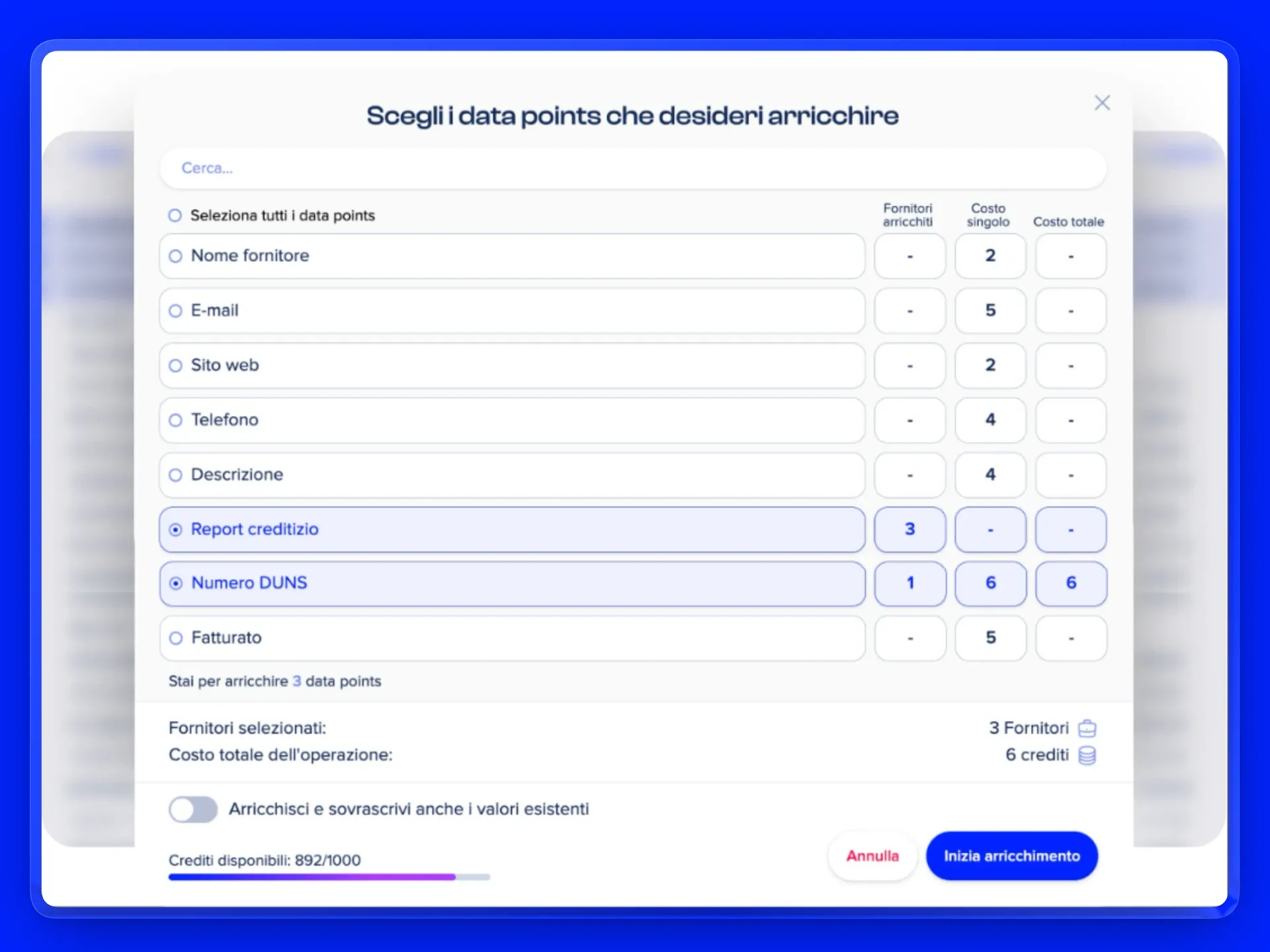
Among Supplier Intelligence platforms, Soource stands out with its Discovery search module, which allows users to run queries within a proprietary database. The presence of this database is crucial not only for data quality, but also for transparency. Unlike a marketplace, the database provides an unbiased overview in which rankings are not influenced by sponsorships. In addition, thanks to semi-automated RFX distribution, the database is updated with every request, becoming increasingly detailed and accurate over time. Soource integrates with ERP systems as an additional module and enables enrichment of the existing vendor base by uploading current suppliers and performing on-demand enrichment with verified data through DataLab.
In summary, Soource’s automated scouting enables teams to:
- Identify new suppliers through semantic search based on a proprietary database;
- Filter results by revenue, legal structure, geographic distance, ATECO code, and other parameters;
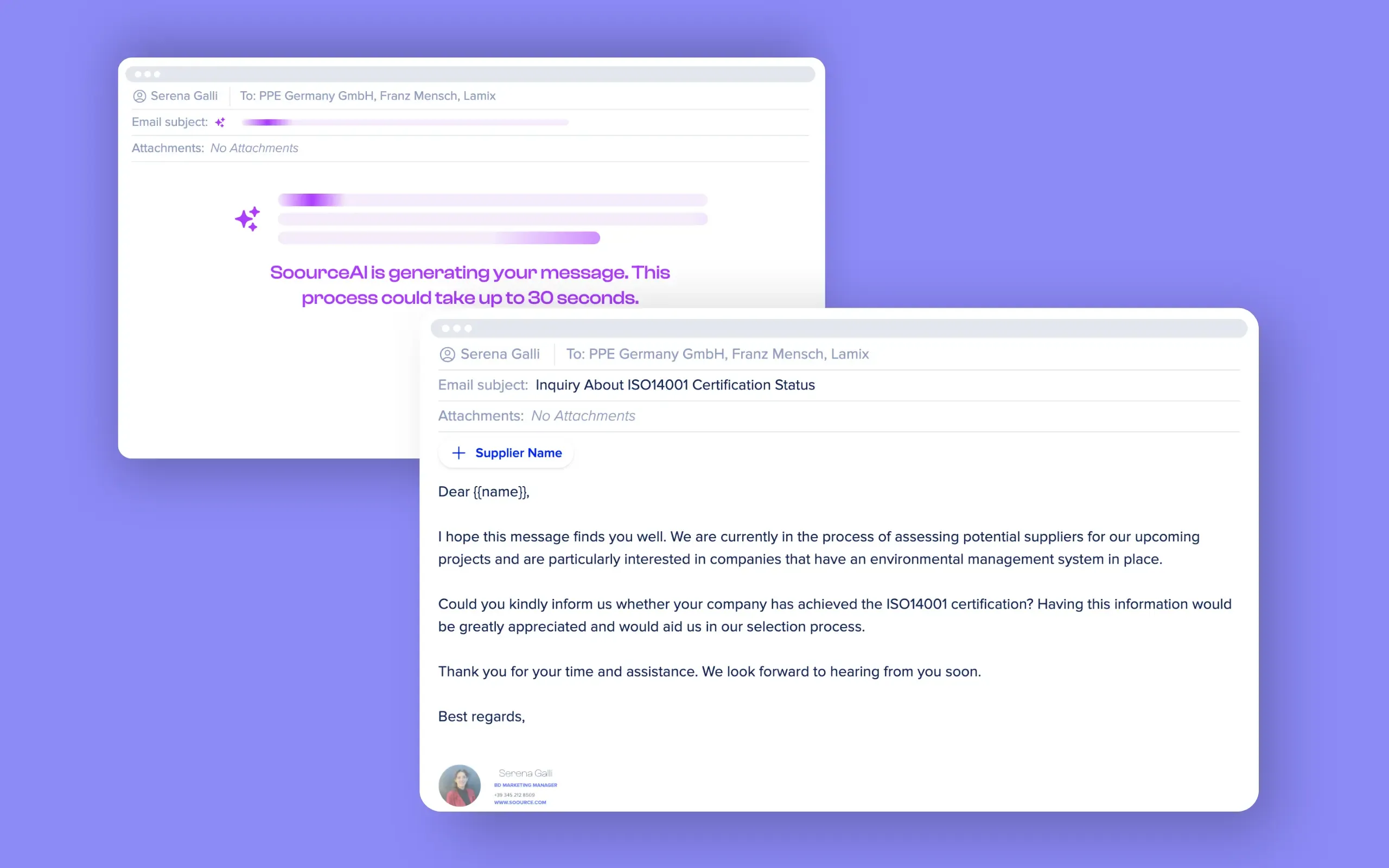
- Automatically send RFI and RFQ emails starting from an AI-generated draft;
- Centralize and structure supplier responses through automated email analysis;
- Automatically update the vendor base with new data and contacts.
Practical benefits:
Reduction in average time required to select a new supplier;
Fewer manual tasks and more time for negotiation activities;
Lower risk of errors and data dispersion;
Immediate comparison of offers, prices, certifications, and terms.
2. Market analysis and research on official databases
- Procurement managers can also identify new suppliers through:
- Chambers of commerce and company registers;
- Industry databases;
- Export portals and virtual trade fairs;
- Certification directories (ISO, CE, UL, etc.).
These tools provide reliable information, often at a cost, but require significant time for data collection, verification, and normalization. Moreover, these processes are still largely manual, increasing the likelihood of errors and resulting in a considerable investment of time in low–value-added activities.
3. Trade fairs and professional networking
Trade fairs remain a valuable channel to meet new suppliers, see products firsthand, and compare alternatives. Especially in vertical industries, these events increase the chances of discovering new companies, but they also involve costs that must be taken into account.
In summary, the benefits are:
- Direct relationships with company representatives attending the event;
- Immediate visibility into market innovations;
- Networking opportunities with competitors and stakeholders.
Limitations:
- Participation costs;
- Limited scalability;
- Long lead times for contact collection and management.
Key Criteria for Selecting New Suppliers
| Category | What to assess | Operational source |
|---|---|---|
| Reliability | Financial stability, operational continuity | Credit reports, Soource DataHub |
| Quality | Certifications, production standards | ISO certifications (available via Soource), technical documentation |
| Capacity | Lead time, production capacity, volumes | Automated RFI/RFQ via Soource |
| Compliance | Industry regulations, ESG compliance | Audits, ESG reports, regulatory databases |
| Cost | Price competitiveness, TCO | Comparative analysis, market benchmarks |
How to structure a scalable process to find new suppliers
An effective process for identifying and selecting new suppliers starts with a clear definition of requirements. Before launching any scouting activity, the procurement team must precisely outline the technical specifications of the product or service, expected volumes, regulatory requirements, and the ESG criteria the company intends to apply.
Once the category scope has been defined, different research levers can be activated. Digital scouting solutions provide a broad overview of market players, making it easier to identify the best available options.
With a defined set of potential suppliers, it is essential to start a structured information-gathering phase. Through platforms like Soource, procurement teams can automatically generate RFI and RFQ documents based on the initial requirements, standardizing requests and ensuring that all suppliers respond according to the same evaluation criteria.
The next step is the objective comparison of offers. Soource’s dashboard supports this phase by enabling immediate comparison of key elements such as unit prices, delivery terms, certifications, and compliance with technical requirements, reducing both time and the risk of subjective evaluations.
Finally, to keep the process truly scalable, the vendor base must be continuously updated. The platform automates this activity by updating contacts, certifications, technical tags, and by adding new suppliers identified through scouting projects, preventing duplicates, outdated data, and lack of visibility into available alternatives.
Finding new suppliers is a competitive advantage
For procurement and supply chain teams, the ability to find new suppliers is no longer a nice-to-have, but a decisive competitive advantage.
The evidence shows that:
- Dependence on a limited number of suppliers increases risk;
- Digital vendor intelligence tools enable reaction in days, not months;
- RFI/RFQ automation and data centralization enable scalable, continuous processes.
The combination of analysis, multisourcing, and platforms like Soource makes it possible to build truly resilient, data-driven supply chains that are ready to adapt to change.
If you would like to learn more about how Soource can help your procurement team maintain an up-to-date vendor base with verified, reliable data, while automating the scouting process, book a demo today.
Book a demo

FAQ
We have collected the most frequently asked questions here, but don't hesitate to contact us if you have any doubts or want to know more about Soource.
Is Soource compatible with my ERP (Enterprise Resource Planning or Procurement Suite)?
Yes, Soource is compatible with major ERP and procurement software like SAP Ariba, Jaggaer and other enterprise systems. You can integrate it for bidirectional data exchange or use it as a plug & play solution, without the need for integration.
Are my data on Soource protected and secure?
Absolutely. All corporate, personal and supplier data remains your property and is processed according to GDPR and European regulations. Generic data is anonymized to improve platform and Soource community performance.
Where does supplier data on Soource come from?
Soource's database combines:
- Certified and public sources
- Data collected from intelligent web crawling
- Information automatically extracted from corporate emails
Today Soource offers the largest database of Italian companies with direct email contact.
Can I attach files to RFI, RFQ or RFP on Soource?
Yes, you can attach documents in any format to your requests (RFI - Request for Information, RFQ - Request for Quotation or RFP - Request for Proposal). In particular, for RFIs, it is recommended to include a technical specification sheet of the product to get more detailed responses from suppliers.
Can I send follow-ups to suppliers with Soource?
Yes. With Soource you can filter suppliers who haven't responded and send a mass follow-up in one click. This helps you double the response rate, up to 80% on average, improving RFI, RFP and RFQ management.
Is Soource compliant with the European AI Act?
Yes. Soource's artificial intelligence is compliant with the European Union's new AI Act, falling into the zero-risk category, as it only supports internal activities and does not automate outward processes or critical decisions.
Why use Soource for RFI and RFP?
With Soource you can:
- Create RFI (Request for Information) and RFP (Request for Proposal) in just a few clicks
- Send them automatically to selected suppliers
- Analyze responses with artificial intelligence
- Extract and compare certifications, availability, technical capabilities
You save time and identify the best suppliers more quickly.
Can I also use Soource for RFQ?
Yes. Soource also supports RFQ (Request for Quotation) to request economic offers. The platform automates:
- RFQ sending
- Response reception and reading
- Comparison of prices and conditions